

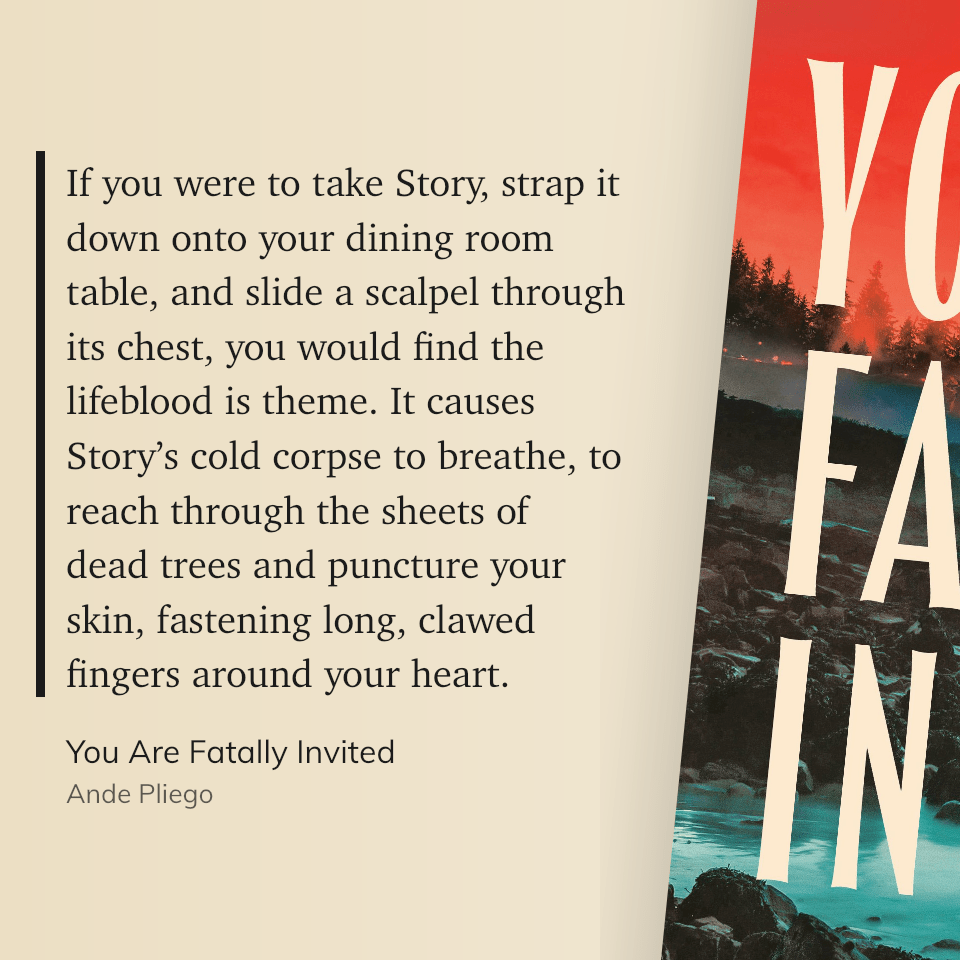
“If you were to take Story, strap it down onto your dining room table, and slide a scalpel through its chest, you would find the lifeblood is theme. It causes Story’s cold corpse to breathe, to reach through the sheets of dead trees and puncture your skin, fastening long, clawed fingers around your heart.” (Ande Pliego, You Are Fatally Invited)
Return to a story months after finishing it and the plot has gone soft around the edges. A scene that once seemed essential now feels like scaffolding. A character says something you no longer remember writing, and the sentence lands with the uncomfortable precision of a message left for you.
That is where theme lives.
We tend to speak of theme as though it were an ingredient added during revision, identified only once the plot has already been set in motion. Yet the stories that stay with us seem to have discovered their themes before their writers did. The writer follows a character into a difficult choice and gives that character a wound. The consequences accumulate across scenes where small decisions echo against larger fears, and beneath that movement, one question keeps returning.
Writers ask what a story’s theme is. During revision, the sharper question is what is actually happening here.
Look at the moments that resist deletion and the images that surface again and again without being invited. When those elements pull toward the same human concern, that draw is the story’s real subject.
The theme was there in the first draft. It had been throbbing under the plot before you noticed it.
Stop trying to name your story’s theme. Cut into the scene that refuses to let you go and see what is waiting underneath.
R.A.R.
If you would like to learn more about the craft behind storytelling, my articles on Ramos On go deeper every Tuesday and Thursday. Subscribe here
 Rolando Andrés Ramos
Leave a comment