

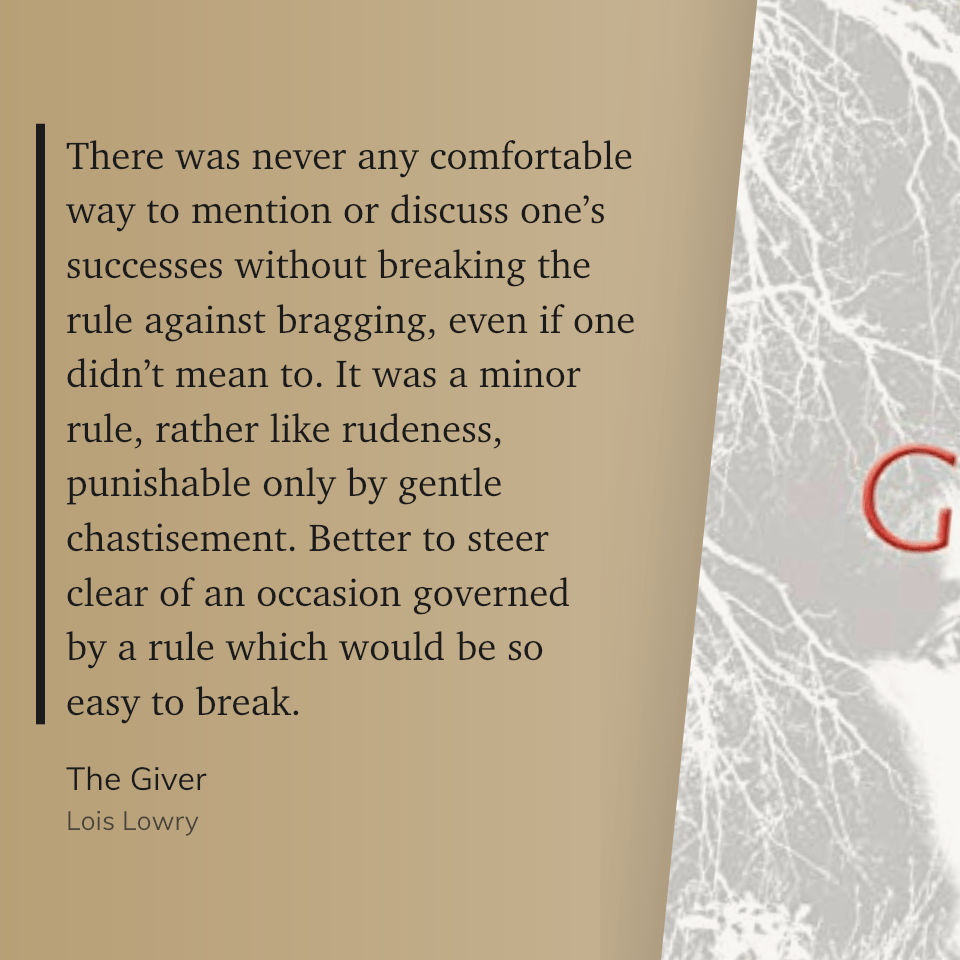
“There was never any comfortable way to mention or discuss one’s successes without breaking the rule against bragging, even if one didn’t mean to. It was a minor rule, rather like rudeness, punishable only by gentle chastisement. Better to steer clear of an occasion governed by a rule which would be so easy to break.” Lois Lowry, The Giver
Every craft rule contains a version of this same trap, a boundary faint enough to cross without intending to do so. The boundary easiest to break by accident is usually the one a writer stops approaching at all.
A subject gets left alone because it might tip into sentimentality. A sentence gets cut short before it becomes overwrought. A scene never gets attempted because its tone sits one step past where the writer feels steady. An ending gets softened because the true one might land too hard.
From the inside, this looks like restraint, editorial instinct, and the quiet confidence of a writer who knows their own limits. A writer will say the piece needed less, or that shorter simply worked better. Sometimes that’s true. Often, the rule made the decision before the writer did.
The cost builds slowly. A writer who looks back across ten years of work will find the same risks not taken, project after project.
There’s a real difference between a piece that failed on the page and a piece that never reached the page because the subject felt dangerous. Most writers blur the two.
Try this.
Pick the subject you’ve been circling without ever drafting a word exploring it.
Draft one paragraph there today. Don’t publish it. Just notice what the rule was protecting you from.
R.A.R.
If you would like to learn more about the craft behind storytelling, my articles on Ramos On go deeper every Tuesday and Thursday. Subscribe here
 Rolando Andrés Ramos
Leave a comment