
Monday Ignition: Touch That Moves the Scene
The body on the page is not evidence of realism. It is the engine of plot. Follow sensation with precision and the story will choose its own ending, often against the writer’s intention.
Key Writing Practice Techniques
Tactile specificity as decision pressure. Physical sensation narrows choice. Texture and temperature push a character toward or away from action without explanation.
Kinesthetic causality. Movement creates meaning. The way a body shifts, hesitates, or commits carries narrative weight equal to dialogue.
Sentence pacing that mirrors sensation. Syntax length, verb choice, and clause order track pressure, resistance, and release.
The Writing Prompt
Write a 500-word scene that unfolds during a single continuous action lasting no more than five minutes of story time. The protagonist performs a familiar physical task that suddenly matters more than it should. Begin mid-action. Exclude backstory. Do not explain why the moment matters.
Anchor the scene in touch and movement. Every paragraph must include at least one tactile sensation or kinesthetic adjustment. Heat, cold, friction, weight, balance, resistance. Let the body register the problem before the mind attempts to name it.
Build toward a choice the character never articulates. The choice arrives through the body. A grip tightens. A step hesitates. A hand refuses. End the scene at the instant the body commits or fails to commit. Stop there. No reflection afterward.
Keep interior thought brief and intrusive. Allow physical sensation to carry subtext. Dialogue may appear but must remain secondary. Description exists only in service of action.
Structure the work as a two-hour session. Draft for forty minutes. Reread aloud for twenty minutes, tightening sentences to sharpen physical cause and effect. Use the remaining time to revise toward pressure and clarity.
Evaluation Criteria
A successful response makes the reader feel pressure in the body before understanding the stakes. Sensations remain concrete and active rather than ornamental. Movement alters the direction of the scene. Sentence rhythm shifts with effort or resistance. The ending lands through physical action rather than explanation.
A weak response treats touch as atmosphere instead of force. Sensations appear once and vanish. Movement feels generic or interchangeable. The scene explains significance rather than enacting it. The final paragraph interprets the action for the reader.
Strong vs. Weak Examples
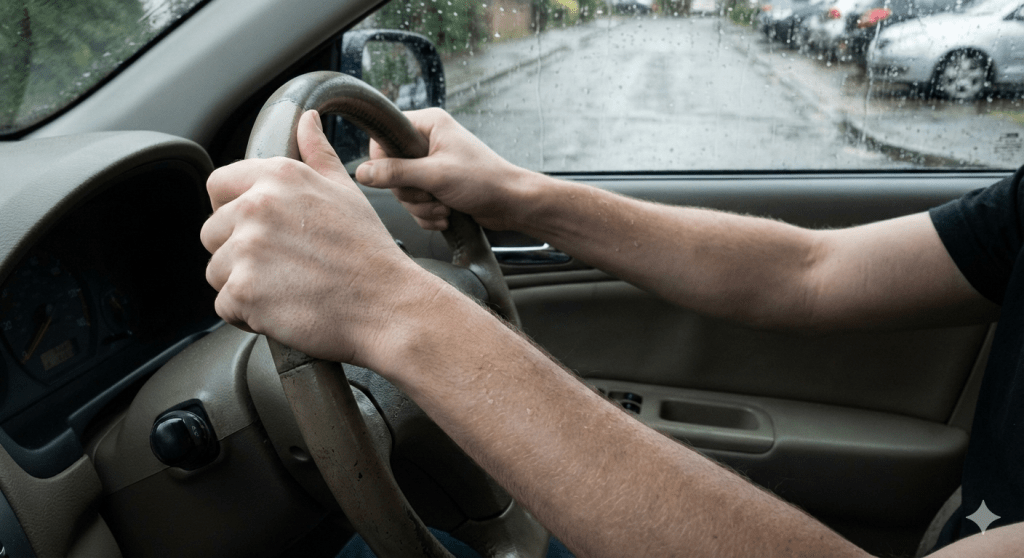
Strong response: The character’s palm sticks to a sun-warmed steering wheel. Sweat changes the grip. The car drifts inches. A knee jerks. The choice arrives through correction or refusal.
Weak response: The day is hot. The steering wheel feels warm. The character feels nervous and decides what to do.
Workshop and Revision Questions
Where does the body know more than the mind in this scene?
Which sentence carries the most physical resistance, and why?
Where could a sensation replace an explanation?
What specific movement marks the moment of commitment?
Which tactile detail repeats, and does it increase pressure or flatten it?
Literary Model
Raymond Carver, A Small, Good Thing. Observe how physical actions such as kneading dough, handling food, and standing in doorways carry emotional consequence and moral shift without explanatory commentary. Notice how touch and movement replace interior analysis.
AI Disclosure Statement:
This writing prompt was created in collaboration with ChatGPT, an AI model by OpenAI, to support creative practice. ChatGPT assisted with idea generation and drafting; the final text was edited by the author. The illustration was created using Google Gemini.

Leave a comment