
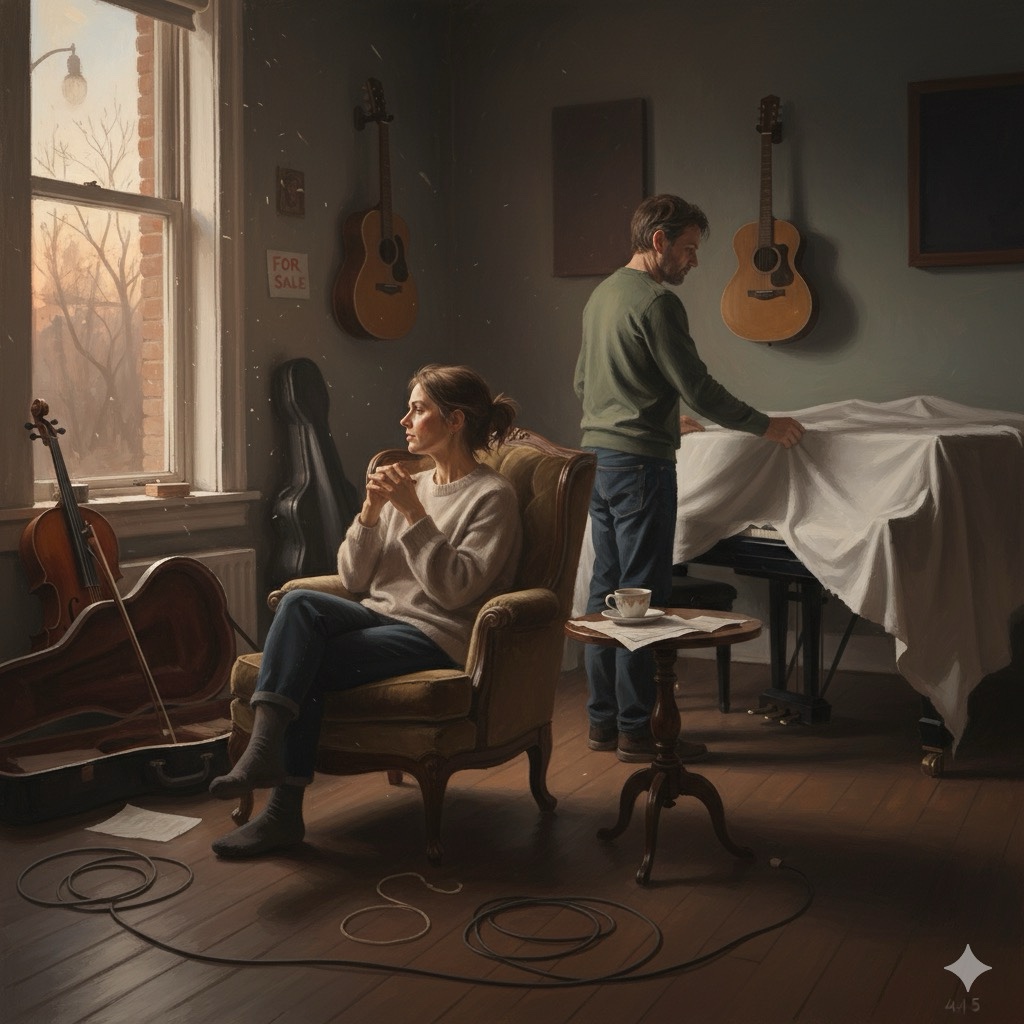
Wednesday Lumen: The Gravity of Adjusted Desire
True change begins not when a desire is fulfilled or abandoned, but when wanting itself becomes quieter and more deliberate. The story’s power lies not in what the character reaches for, but in how they learn to reach less.
Key Techniques
1. Recalibrated longing: The character revises what they want without losing who they are, creating tension between endurance and evolution.
2. Inverted pursuit: The story moves not through gain or loss, but through the redefining of what is worth seeking.
3. Restrained emotion: The meaning emerges from what is withheld—the pause, the gesture, the unspoken acceptance.
Writing Prompt (approx. 500 words)
Write a scene in which a character has already chosen to let go or reshape a long-held desire. Begin after that choice. The story unfolds in the quiet that follows, as the character interacts with someone who once shared, opposed, or depended on that desire.
Keep the focus on renewal, not despair. The scene is about living differently, not giving up. The tone may be calm, reflective, or bittersweet, but it should hold forward motion.
Place the story in an ordinary setting that reflects subtle transition: a studio being cleared, a dinner table half set, a greenhouse after harvest, a rehearsal room closing for the night. Use sensory details that show both the traces of what was and the beginnings of what will be.
End with one image or action that captures continuity through change—a small act of care, a repurposed object, a quiet beginning. Let the story breathe in ambiguity without forcing resolution or closure.
Strong responses reveal emotional transformation through texture and restraint, allowing contradiction and quiet dignity to coexist. Weak responses explain or dramatize the choice too heavily, turning reflection into sentimentality or defeat.
Evaluation Criteria
1. The emotional shift feels earned through detail, not explanation.
2. Physical texture anchors the interior change.
3. Dialogue or silence carries subtext rather than exposition.
4. The final moment feels both natural and unresolved.
Follow-Up Questions for Workshopping or Revision
What image or action best represents the character’s new balance?
Where does the reader sense persistence rather than loss?
If the explanation of the choice were removed, would the story still hold?
Does the setting mirror both what has ended and what continues?
Recommended Reading
Elizabeth Strout’s “Motherless Child” shows how relinquishing a long-cherished expectation can deepen, rather than diminish, a character’s sense of self.
AI Disclosure Statement:
This writing prompt was created in collaboration with ChatGPT, an AI model by OpenAI, to support creative practice. ChatGPT assisted with idea generation and drafting; the final text was edited by the author. The illustration was created using Google Gemini.

Leave a comment