
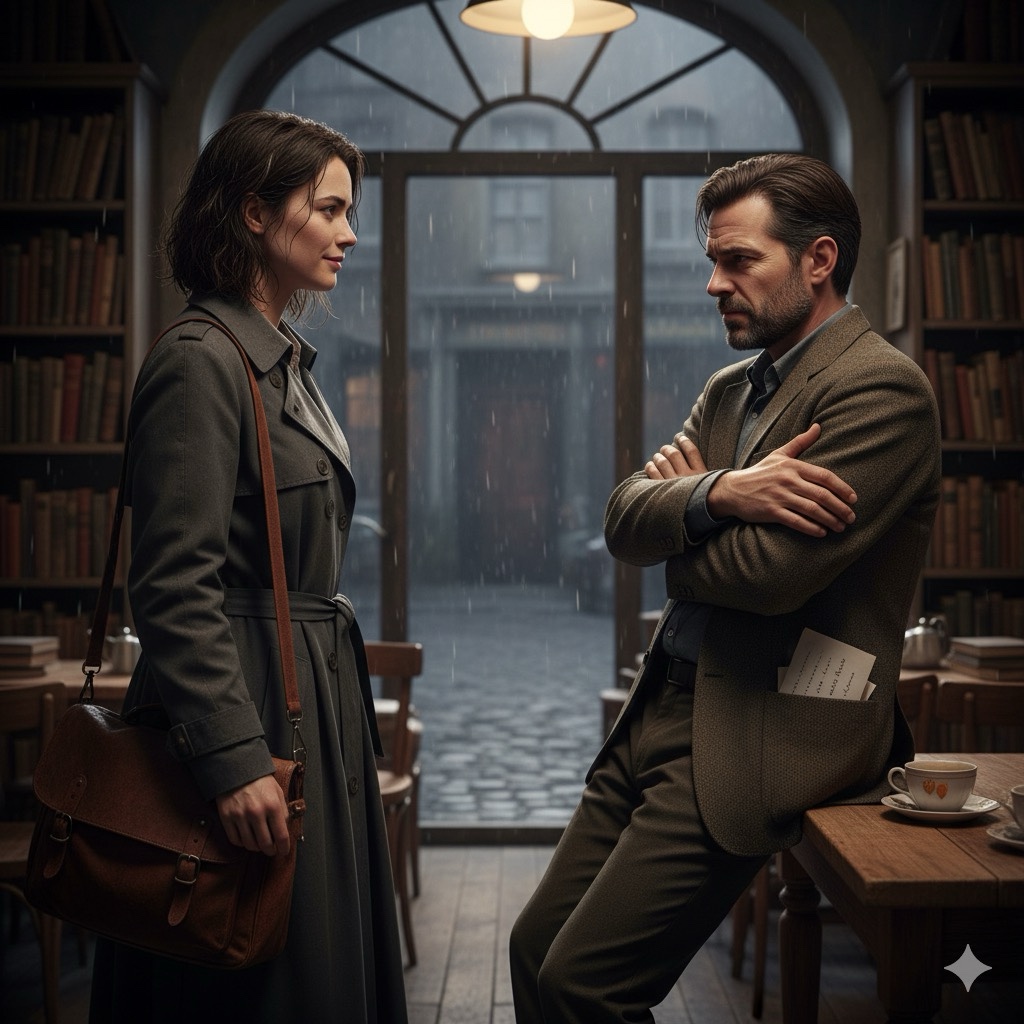
Monday Ignition: Shadows in Speech Prompt
Key Techniques
1. Dialogue as continuity, where the unseen past bleeds into the present moment through speech
2. Subtextual layering, where what a character says diverges from what they think and feel
3. Responsive tension, where dialogue unfolds as reaction to the last spoken word rather than as preplanned lines
500-Word Prompt
Write a scene in which two characters meet in a charged moment. One character has just arrived. The other has been waiting. The waiting character has overheard or discovered something beforehand that alters the way they hear every word. Do not explain this knowledge directly. Let it filter into tone, interruption, silence, and the choice of what is not said. Keep the characters’ histories alive on the page. Where were they an hour earlier? What residue from that place lingers in their body and voice? Use the dialogue to carry private thought, emotional weight, and hidden intent.
Strong response: The exchange feels jagged with pressure. Each line bears the shadow of something unsaid. A character might say, “You’re late,” but the clipped delivery and tight rhythm reveal worry mixed with anger. Silence after a charged statement stretches too long and becomes the loudest part of the scene.
Weak response: Dialogue runs smoothly without friction. Each line conveys facts or advances plot in a flat, predictable way. Any hidden context is explained in narration rather than revealed through speech. The lines feel scripted rather than lived.
Evaluation Criteria
1. Every spoken line conveys more than its surface meaning
2. Silences, evasions, or half-answers carry as much weight as direct speech
3. The immediate past before the scene shapes rhythm, pacing, and urgency
4. Each voice is distinct, marked by history, temperament, and desire
Follow-up Questions for Workshopping
1. What piece of hidden history is carried by each line of dialogue
2. Where does the exchange rely on silence or evasion rather than open conflict
3. How would the dialogue shift if the overheard or discovered knowledge changed in detail
4. Does the pacing of the conversation reflect the inner tempo of each speaker
Recommended Reading
Grace Paley’s story “Wants,” where clipped dialogue between former spouses reveals decades of longing, regret, and stubbornness beneath the surface
Dialogue becomes most alive when characters speak words they do not fully mean. The falsehood on the surface gives the truth below sharper teeth, and resistance to saying what matters often delivers a more powerful revelation than confession ever could.
AI Disclosure Statement:
This writing prompt was created in collaboration with ChatGPT, an AI model by OpenAI, to support creative practice. ChatGPT assisted with idea generation and drafting; the final text was edited by the author. The illustration was created using Google Gemini.

Leave a comment