
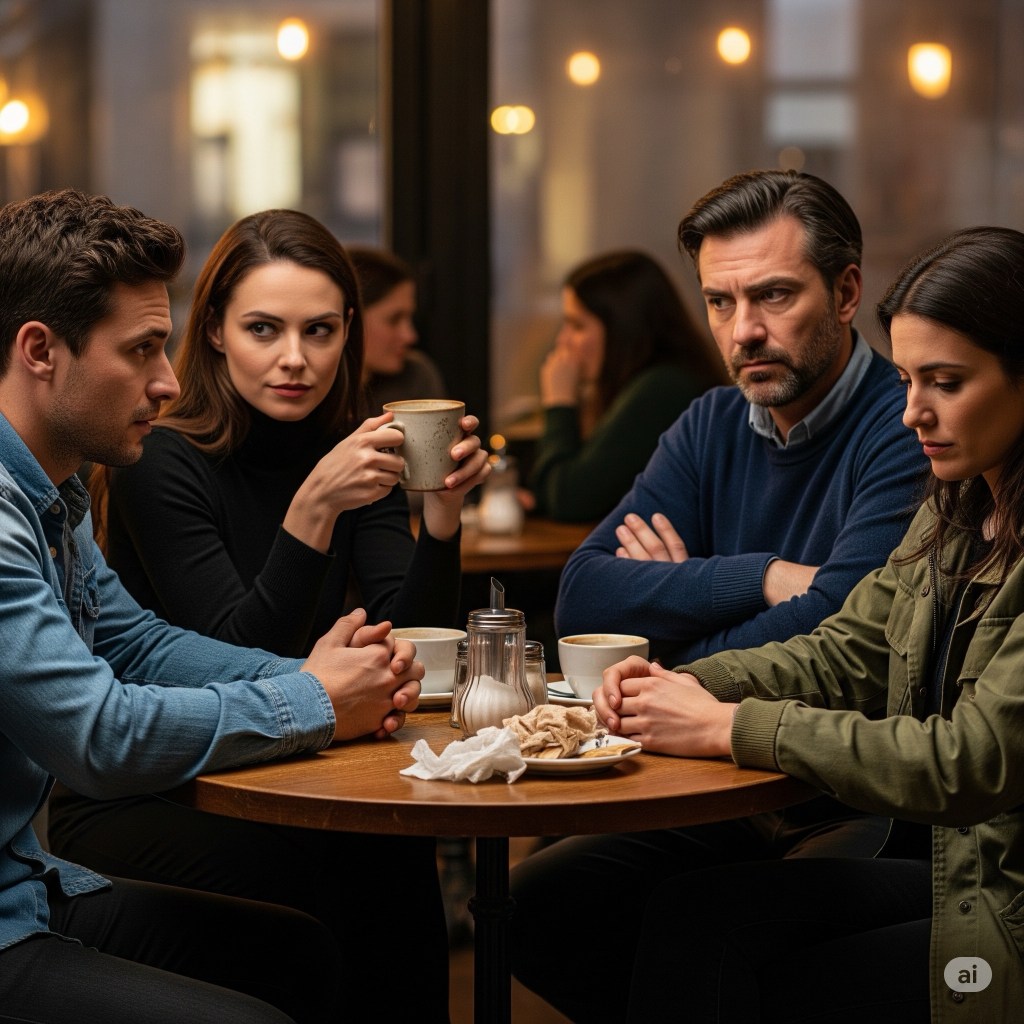
This image, generated by Gemini, is a photorealistic illustration of a seemingly ordinary conversation charged with underlying tension. It visually anchors a narrative exploring how shifting perspectives can transform a simple event into something profound.
Monday Ignition: Through Three Doorways of Perspective Prompt
Key techniques illustrated by the quotation:
1. Point of view as constraint and opportunity: The narrator’s vantage point determines the intimacy, authority, and rhythm of the story.
2. Voice and distance: Choices in perspective shape how close or detached the reader feels from the events.
3. Experimentation within limits: Even rare or unconventional points of view can succeed when they are grounded in purposeful storytelling rather than novelty.
Writing Prompt (500 words):
Write a scene in which a single pivotal event is retold three times through different narrative doors: first person singular, second person singular, and first person plural. The event must be ordinary on the surface—a meal, a walk, a phone call, a conversation—but the shift in point of view should transform how the reader perceives it. Each retelling must not simply repeat the same content but reveal something new about the characters, setting, or emotional stakes. In the first person, emphasize interiority and subjectivity. In the second person, build immediacy and pressure, as though the reader cannot escape the experience. In the first person plural, explore collectivity, shared perception, or even the false comfort of group identity. Keep the scene under 500 words total, with roughly 150–180 words per perspective.
Evaluation Criteria:
A successful response demonstrates clear differentiation in tone, diction, and focus between the three perspectives. Each shift in point of view should produce new insights or emotional resonances, not just cosmetic changes in pronouns. Strong writing will avoid gimmickry; the rare perspectives (second person, first plural) should feel organic to the material, not forced. Weak responses will recycle the same details without deepening the reader’s understanding, or will flatten the unique possibilities of each perspective into sameness.
Workshop and Revision Questions:
What does each perspective reveal that the others conceal?
Where does the choice of pronoun heighten urgency, intimacy, or distance?
Do any of the versions collapse into redundancy, and how might they instead sharpen contrast?
How does the order of the retellings shape the reader’s experience?
Which version feels most alive, and why?
Recommended Reading:
The opening of Julie Otsuka’s The Buddha in the Attic demonstrates the power of first person plural, balancing intimacy and anonymity within a collective voice.
Strong example: The first-person account lingers on sensory detail of a teacup slipping from a hand, the second-person version traps the reader in the inevitability of watching it fall, and the first-person plural evokes the chorus of family members watching, each with a different unspoken fear. The same moment accrues weight with each retelling.
Weak example: The three versions repeat the same factual description of a dropped teacup, with only pronoun changes and no shift in perspective, emotional depth, or revelation.
This exercise can be completed in two hours: 15 minutes brainstorming the event, 75 minutes drafting the three variations, and 30 minutes revising with attention to contrast and revelation.
AI Disclosure Statement:
This writing prompt was created in collaboration with ChatGPT, an AI model by OpenAI, to support creative practice. ChatGPT assisted with idea generation and drafting; the final text was edited by the author. The illustration was created using Google Gemini.

Leave a comment