
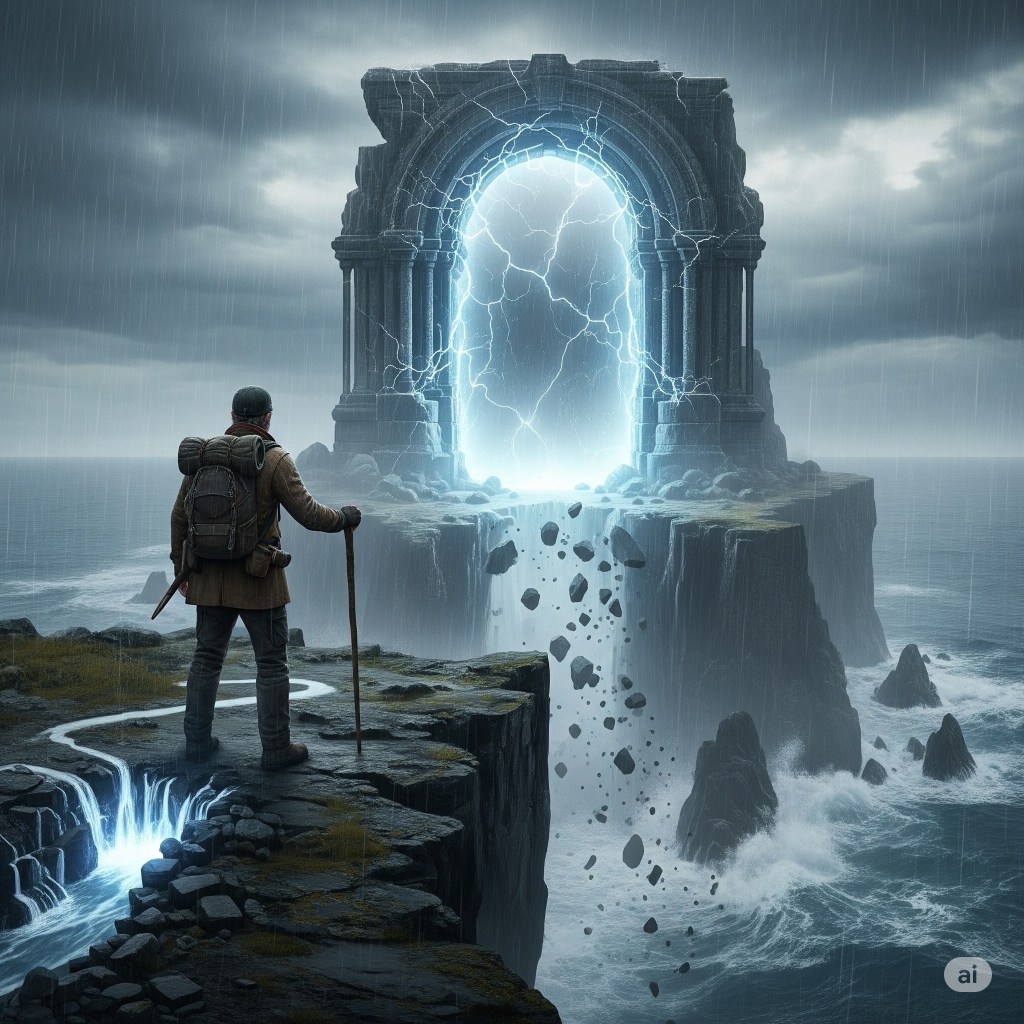
Wednesday Lumen: The Second Doorway Prompt
Key Techniques to Practice
1. Structural escalation: The second doorway forces the story past hesitation and into inevitable confrontation.
2. Character stakes under pressure: The new crisis or clue reshapes what the character believes is possible, desirable, or survivable.
3. Forward propulsion: Once this moment happens, the narrative cannot stall or backtrack—it must rush toward conclusion.
Prompt (approx. 500 words)
Write a scene in which your protagonist encounters an irreversible turn that launches the story toward its end. The moment should occur at least two-thirds of the way into the imagined narrative, not at the beginning. Begin with your character believing the worst is behind them or that progress has been made. Within two pages, deliver a revelation, loss, betrayal, or discovery that obliterates this illusion. The event should raise the stakes and strip away any comfortable alternatives, leaving only one fraught path ahead.
Do not summarize. Render the scene in real time. Use setting, gesture, and dialogue to embed the shift. End the scene with the protagonist fully aware that they cannot return to the status quo. Leave the reader asking: what will this character do now?
Strong vs. Weak Responses
Strong: The setback is specific, personal, and irreversible (a trusted ally switches sides; the long-sought solution proves poisonous; a letter arrives proving the antagonist has already won in some way). The prose builds tension through sensory detail and character reaction. Dialogue reveals shifting relationships. The protagonist’s changed perspective is clear by the final lines.
Weak: The crisis is vague or generic (someone gets angry, an obstacle is “harder than expected,” a random accident blocks the way). Prose skims or summarizes the event. Characters respond flatly or without consequence. The protagonist exits the scene unchanged, free to continue as before.
Evaluation Criteria
• The crisis or revelation genuinely closes off prior paths and opens only a forward thrust toward climax.
• The moment is dramatized, not reported.
• The character’s internal and external stakes rise meaningfully.
• The shift is clear in how the protagonist perceives their situation by the end of the scene.
Follow-up Workshop Questions
• Does this event truly eliminate alternatives, or could the protagonist still retreat?
• How does the protagonist’s emotional state at the end differ from their state at the start?
• What new, sharper question does the reader carry into the climax?
• Is the scene burdened with coincidence, or does it arise organically from earlier choices and tensions?
Recommended Reading
Excerpt: “Ethan Frome” by Edith Wharton. The pivotal sledding decision late in the novel acts as the second doorway, locking the characters into a chain of consequences they cannot undo. Wharton shows how one seemingly small but charged choice can propel a narrative to its conclusion with inevitability and tension.
Would you like me to prepare a parallel version of this exercise where the second doorway comes from an unexpected piece of good news—so writers can explore escalation through hope as well as crisis?
AI Disclosure Statement:
This writing prompt was created in collaboration with ChatGPT, an AI model by OpenAI, to support creative practice. ChatGPT assisted with idea generation and drafting; the final text was edited by the author. The illustration was created using Google Gemini.

Leave a comment