
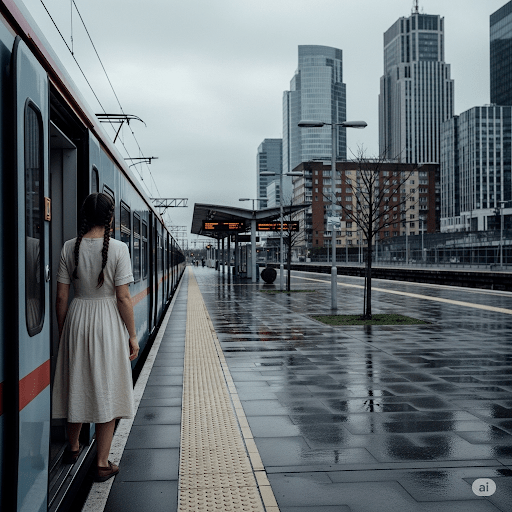
A traveler exits a train onto a wet platform, the towering cityscape a stark reminder of a quieter past. Created with Gemini for a scene-setting exercise.
Writing Exercise: Memory as Architecture—Evoking Place Through Character Perception
Sensory Juxtaposition Through Character Memory – The character’s present perception is filtered through a memory of a similar place, creating layered resonance and contrast. Concrete Inventory of Place – Specific, tangible details anchor the setting, giving it weight and specificity. Implied Character Voice Without Direct Description – The rhythm and content of the thoughts reveal background, tone, and perspective, letting the setting do the talking.
Writing Prompt (500 words):
Write a scene in which a character arrives in a new place—this could be a city, a rural town, a forgotten building, or even a futuristic outpost. Instead of describing the place directly, let the character understand it through comparison to somewhere they’ve been before. The earlier place may be their hometown, a prison, a battlefield, a childhood apartment—something charged with emotional or historical significance. Avoid explaining the memory; let the physical elements of both places (architecture, weather, sound, spatial layout, objects) do the comparison work. Use the lens of this remembered place to shape the tone and emotional undercurrent of the scene.
The character’s interiority must emerge through the precision of what they notice. If they compare two forts, what kind of person does that suggest? Use that specificity to build the character without overt backstory.
Evaluation Criteria:
The setting must feel fully embodied and specific, grounded in concrete detail. Abstract mood-setting (e.g., “the city felt heavy with history”) weakens the impact. The comparison between locations must carry emotional or narrative weight, not just surface-level resemblance. The character’s perception should imply backstory, emotional state, and worldview through what is noticed and what is omitted. Voice must be consistent and embedded in the language of observation, not separated as commentary.
Strong Response Example:
A paramedic walks into a flooded Houston apartment building and sees, in the mold patterns and broken balconies, echoes of post-earthquake Port-au-Prince. She counts stairs like she once did aftershocks. The resemblance is visual, but it also shapes how she moves, what she expects, and what she fears.
Weak Response Example:
A tourist walks into Rome and remembers visiting Paris, but only mentions both have “old buildings” and “lots of cafes.” The comparison feels shallow, the details generic, and no emotional or narrative tension results from the observation.
Workshopping and Revision Questions:
Does the comparison deepen the reader’s understanding of the character or merely decorate the prose? Are the details doing enough narrative work? Which elements of the setting could be more specific, more charged? What’s the emotional undercurrent of the comparison—nostalgia, fear, contempt, longing? Is it consistent and supported throughout? Would the scene still carry weight if one of the places were removed? If not, what needs to shift to make each setting essential?
Recommended Reading:
Excerpt from The Known World by Edward P. Jones. His handling of how characters perceive place—through memory, contradiction, and interior silence—mirrors the technique of layered, character-inflected setting that Leonard uses. Read the passage describing the journey from Manchester County to Washington, D.C., and study how the past interlaces with the present through landscape and object.
AI Disclosure Statement:
This writing prompt was created in collaboration with ChatGPT, an AI model by OpenAI, to support creative practice. ChatGPT assisted with idea generation and drafting; the final text was edited by the author. The illustration was created using Google Gemini.

Leave a comment