
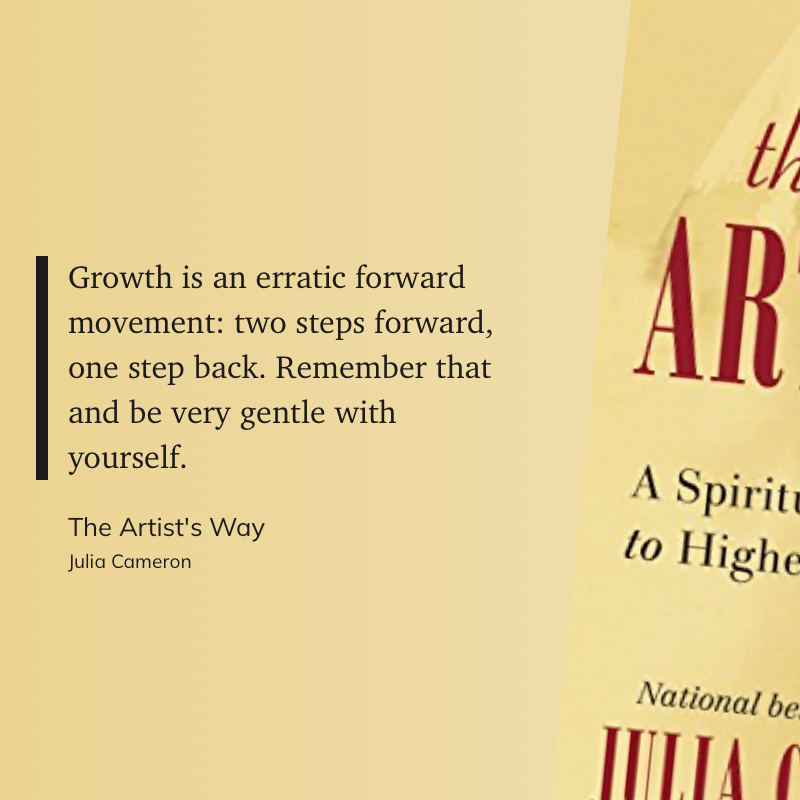
“Growth is an erratic forward movement: two steps forward, one step back. Remember that and be very gentle with yourself.” (Julia Cameron, The Artist’s Way)
Exercise Title: Erratic Steps: Writing Characters Who Grow Unevenly
Key Techniques Illustrated by the Quotation:
Nonlinear Character Growth: Characters evolve through fits and starts, not smooth progression. Emotional Honesty in Characterization: Depict internal setbacks authentically, without forcing resolution. Tonal Gentleness Toward Flaws: Treat character mistakes with compassion rather than judgment.
500-Word Writing Prompt:
Write a scene in which a character believes they have conquered a personal fear, only to relapse in a moment of unexpected pressure. Set the scene within a small, intimate environment (a kitchen, a waiting room, a car at a red light). Show the character’s momentary triumph, the triggering moment of setback, and their reaction—whether denial, frustration, self-compassion, or something more complicated. Use sensory detail and small gestures to reveal the emotional shift. Allow the relapse to feel messy, contradictory, and unresolved. The goal is to portray growth not as a neat curve, but as a jagged, deeply human process.
Evaluation Criteria:
Scene must show clear, specific moments of advance and setback within 500 words. Emotional shifts must be shown through action, dialogue, or sensory detail, not exposition alone. Tone toward the character’s setback must remain empathetic, avoiding melodrama or mockery. Strong scenes will leave emotional tension open-ended, rather than wrapping it up too neatly. Word count must stay between 480–520 words.
Strong Response Example:
Character nervously rehearses an apology to a sibling in the parked car, breathes deeply, knocks on the door, and enters—only to snap defensively at the first sarcastic comment. Afterward, they sit numbly on the porch, fingers tracing the worn wood, struggling between self-loathing and grim determination to try again.
Weak Response Example:
Character confidently gives a speech, gets nervous midway, stammers once, but quickly recovers. The fear is treated as a minor hiccup, and the character feels proud by the end with no lingering complexity.
Follow-up Workshopping/Revision Questions:
Where in the scene could a physical detail carry more emotional weight? Are both the forward movement and the setback dramatized clearly enough to be felt, not just understood? Does the ending preserve some emotional ambiguity, or is it falsely resolved? Would adjusting the pacing of the scene create a stronger sense of instability?
Recommended Reading:
Excerpt from Olive Kitteridge by Elizabeth Strout (“Pharmacy” chapter). Strout masterfully shows characters stumbling through growth, particularly in their attempts to connect and forgive, often relapsing into old habits before finding fragile progress.

Leave a comment