
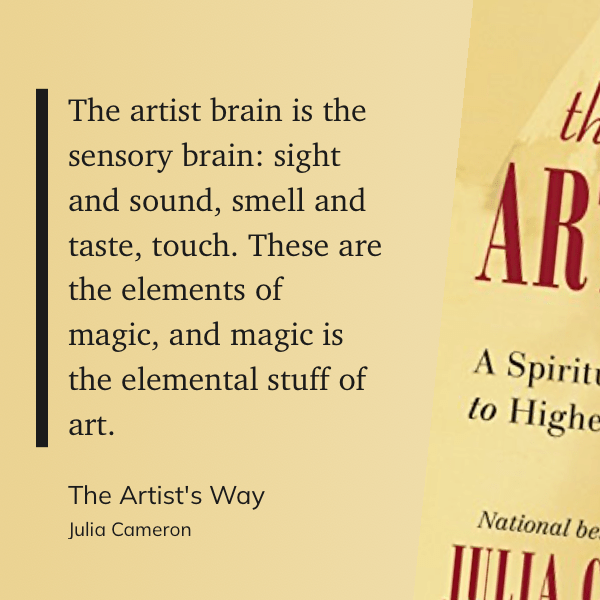
“The artist brain is the sensory brain: sight and sound, smell and taste, touch. These are the elements of magic, and magic is the elemental stuff of art.” (Julia Cameron, The Artist’s Way)
Writing Exercise: The Sensory Key to Character Depth
Techniques to Develop:
1. Multi-Sensory Immersion – Strong writing evokes more than just visual detail. It integrates sound, smell, taste, and touch to create a world readers experience as viscerally as the characters do.
2. Emotional Resonance Through Sensory Detail – Sensory experiences should not just describe a setting; they should reflect a character’s internal state, shaping mood and subtext.
3. Selective Detail for Impact – The right detail at the right moment can transform a scene. Sensory details should be precise and revealing, not just decorative.
Writing Prompt:
A character enters a familiar space that now feels irrevocably changed—this could be a childhood home after years away, a workplace after being fired, a favorite café now tainted by the memory of an argument. The shift must be conveyed only through sensory detail—no direct exposition of the character’s emotions, no “telling” phrases like She felt sad or He was overwhelmed. The reader must infer the character’s emotional state through how they experience the space.
The character may interact with objects, hear snippets of conversation, or notice small changes, but every sensory observation should serve a purpose. The scene should not exceed 500 words.
Evaluation Criteria:
• Sensory richness – The piece must engage at least three senses in a meaningful way, avoiding generic descriptions. Weak: The coffee shop smelled good. Strong: The scent of burnt espresso clung to the air, soured by the sharp tang of cleaning chemicals.
• Emotional subtext through sensory perception – The reader should feel the shift in the space without being explicitly told what has changed. Weak: She felt like she didn’t belong anymore. Strong: The old velvet armchair had been replaced with sleek metal stools, the kind that scraped loudly against the floor—louder than she remembered.
• Precision and intentionality – Every sensory detail should contribute to the character’s emotional state or the story’s mood. Weak: He heard birds outside. Strong: A single crow cawed outside, its voice cutting through the early-morning quiet like a jagged tear in silk.
Follow-Up Questions for Workshopping/Revision:
• Which sensory details carry the most emotional weight?
• Are any descriptions vague or unnecessary? Would replacing them with a more precise detail strengthen the piece?
• Does the mood of the scene come through without explicit explanation? If not, where could sensory elements be deepened or sharpened?
• How does the character’s interaction with sensory elements reflect change—whether in them or in the world around them?
Recommended Reading:
• “The Dead” by James Joyce (from Dubliners) – The final scene masterfully conveys emotional revelation through snow, cold, and sound.
• Excerpt from Beloved by Toni Morrison – Uses taste, smell, and texture to evoke trauma, memory, and the weight of the past.

Leave a comment