
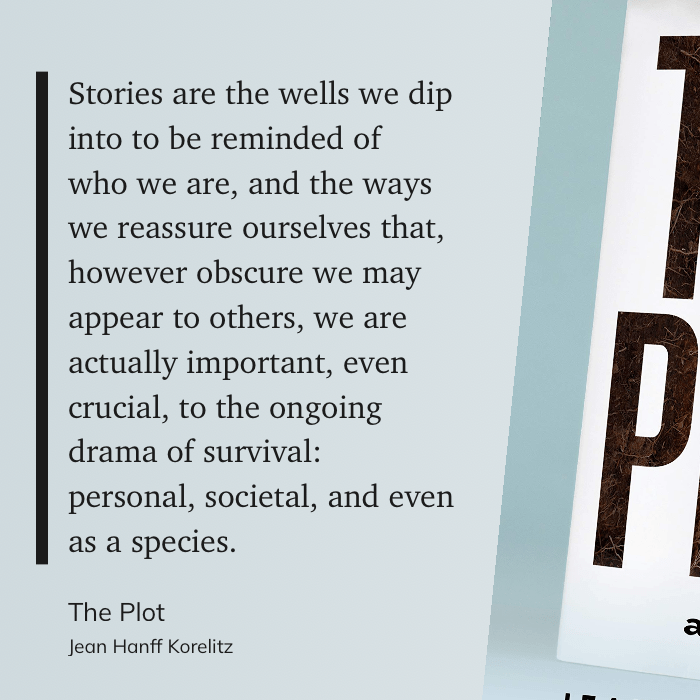
“Stories are the wells we dip into to be reminded of who we are, and the ways we reassure ourselves that, however obscure we may appear to others, we are actually important, even crucial, to the ongoing drama of survival: personal, societal, and even as a species.” (Jean Hanff Korelitz, The Plot)
Writing Exercise: A Prompt for Giving Voice to Overlooked Lives
Key techniques in the quotation include deep personal introspection, merging individual experience with a broader, even existential, struggle, and using vivid symbolism to mark transformation.
Writing Prompt (500 words)
Write a narrative about a character whose ordinary life hides a deeper, unexpected significance in a larger crisis. Open with a simple moment that slowly reveals layers of meaning and the weight of hidden responsibility. Let a small event—a letter, a lost object, or an encounter—ignite an inner awakening that mirrors a larger challenge affecting a community or even a species. The narrative must show the character questioning their own worth and gradually discovering that their personal history and inner life have a crucial role in a broader drama.
Use clear introspection to explore the character’s inner thoughts. Let imagery like water, light, or shadow serve as symbols for renewal and change. Every sentence should drive the narrative forward. Avoid summary or explicit explanation of themes; allow the unfolding events and rich details to show that every life matters, even if unseen by others. The ending should leave a sense of ongoing possibility while confirming the character’s importance in this wider struggle.
The story must be exactly 500 words. Each sentence must add tension and contribute to the evolution of the character. Use dialogue, sensory detail, and symbolic elements to balance inner reflection with the external conflict. Trim any excess detail that does not build toward the character’s transformation.
Evaluation Criteria
The narrative should blend personal introspection with larger stakes. The text must show gradual transformation through clear imagery and purposeful inner dialogue. The story must adhere strictly to 500 words. Each sentence should serve the plot or character development. A strong response reveals the character’s evolving understanding of their own worth while hinting at their role in a larger struggle. A weak response simply lists events or explains ideas directly without using symbolism or subtle progression.
Follow-Up Questions
Does the internal journey echo the external challenge? Are the symbols used effectively without overwhelming the story? Do any parts of the narrative drag or feel forced? Which sentences could be tightened or deepened to better show the character’s transformation?
Recommended Published Excerpt
An excerpt from Tim O’Brien’s The Things They Carried illustrates these techniques well. O’Brien uses physical objects and personal memories to reveal a character’s inner life and the weight of collective experience. Use this as a model for blending individual introspection with larger stakes in your own work.
Keep every word purposeful. Each sentence must pull its weight. Focus on creating a clear, resonant narrative where even the smallest details mark the character’s hidden importance.

Leave a comment