
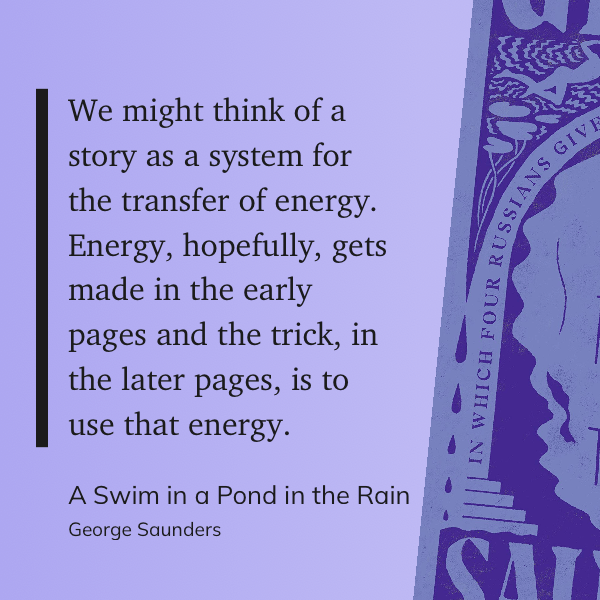
“We might think of a story as a system for the transfer of energy. Energy, hopefully, gets made in the early pages and the trick, in the later pages, is to use that energy.” (George Saunders, A Swim in a Pond in the Rain)
Writing Exercise: Sustaining Energy Across a Narrative
Inspired by George Saunders’ insight, “We might think of a story as a system for the transfer of energy. Energy, hopefully, gets made in the early pages and the trick, in the later pages, is to use that energy,” this exercise focuses on momentum, emotional stakes, and narrative propulsion—the essential forces that drive compelling storytelling.
Key Techniques
1. Generating Narrative Energy: Hook readers with a compelling inciting moment, whether it’s emotional, intellectual, or action-driven.
2. Sustaining Momentum: Use escalating stakes, unexpected complications, or evolving character dynamics to maintain forward movement.
3. Resolving Energy Thoughtfully: Deliver a conclusion that reflects, transforms, or fulfills the initial energy without fizzling out or feeling disconnected.
Writing Prompt
In 500 words, craft a scene or short story that begins with a moment of high emotional or narrative tension. This moment could involve a moral dilemma, a surprising revelation, or an intense action. Use the rest of the piece to sustain that energy by exploring its ripple effects, ensuring that the story does not stagnate or lose intensity. End with a resolution that transforms or redirects the initial energy.
Requirements:
• Open with a sentence or action that immediately generates emotional or narrative energy.
• Maintain momentum by escalating stakes or introducing complications.
• Ensure the ending reflects or resolves the energy introduced at the start.
Evaluation Criteria
1. Strength of Opening Energy (25%)
• Strong Example: A character discovers a cryptic but damning text message while preparing for a speech, triggering immediate tension and curiosity.
• Weak Example: A mundane description of a room or a character waking up with no urgency or emotional stakes.
2. Sustained Momentum (50%)
• Strong Example: Each event or piece of dialogue builds tension (e.g., the protagonist lies about the message, causing cascading misunderstandings).
• Weak Example: The story becomes static (e.g., characters reflect passively without pushing the story forward).
3. Resolution of Energy (25%)
• Strong Example: The energy shifts or transforms—perhaps the protagonist confesses, altering relationships and providing closure.
• Weak Example: The story ends abruptly or fizzles out, with no connection to the initial tension.
Follow-Up Workshop Questions
1. Does the opening create immediate energy that pulls the reader in? How could it be strengthened?
2. Are there moments where the narrative momentum slows down? What changes might re-energize those sections?
3. Does the ending resolve or transform the energy established at the start? If not, why?
Recommended Reading
1. “The Overcoat” by Nikolai Gogol: A masterful example of how energy can shift and evolve. The story begins with Akaky’s obsessive focus on a new coat (a moment of emotional energy), sustains momentum through his triumphs and struggles, and resolves with a haunting transformation of the story’s initial energy.

Leave a comment