


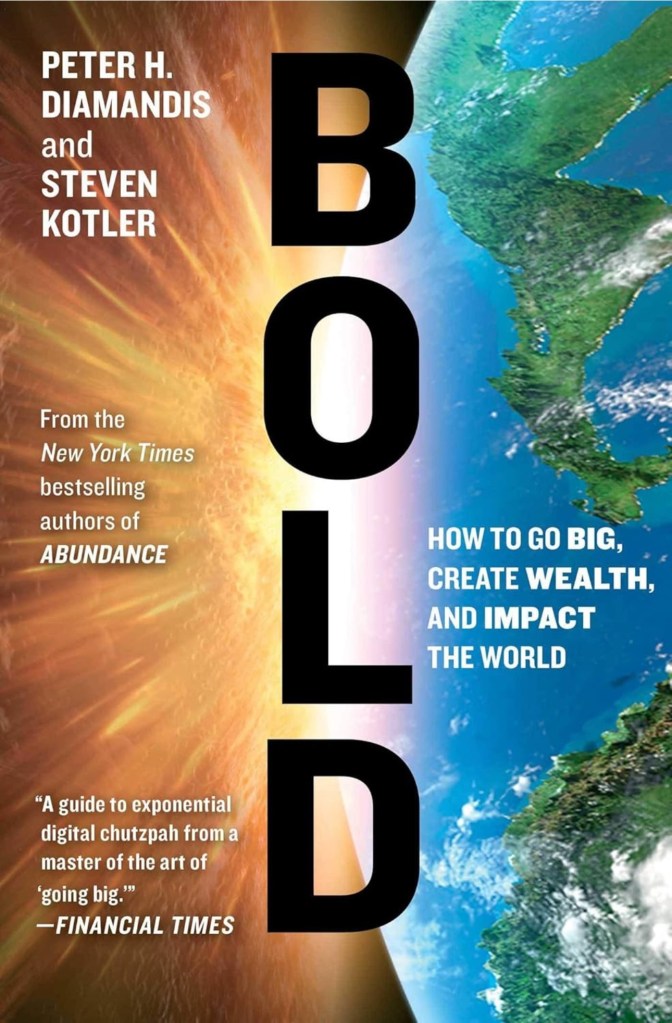
In “Bold: How to Go Big, Create Wealth and Impact the World” by Peter H. Diamandis and Steven Kotler, the authors emphasize innovation, exponential thinking, and leveraging new technologies to create breakthrough success.
The book’s core principles around exponential technologies, entrepreneurial mindset, and disruptive innovation offer profound lessons for writers looking to reinvent their creative careers.
Here’s a comprehensive framework for writers to leverage these insights:
Key Principles for Writers:
1. Exponential Technologies: The book highlights how rapidly advancing technologies, from AI to digital platforms, are creating opportunities to scale creativity. Writers can utilize tools like AI-assisted writing software, self-publishing platforms, or even interactive media to amplify their work.
2. The Power of the Moonshot: Diamandis and Kotler discuss the importance of setting audacious, “moonshot” goals. For writers, this translates into challenging the limits of conventional storytelling or genre, experimenting with formats, themes, or narrative structures that might feel unthinkable at first.
3. Crowdsourcing and Community Building: Writers can use platforms like Patreon, Substack, or even social media to cultivate a community of supporters. Crowdsourcing ideas, feedback, or even funding can help bring big creative visions to life without needing traditional publishers or gatekeepers.
Practical Strategies for Applying Exponential Thinking:
1. Leverage Digital Tools for Efficiency: Writers can use AI tools not just for drafting but for idea generation, plot development, and even marketing. These tools allow for rapid iteration and exploration of creative ideas without being bogged down by perfectionism. Writers should view technological assistance as a partner in the creative process, not a shortcut.
2. Diversify Content Delivery: Think beyond traditional books. Writers can turn their novels into podcasts, serialized stories, or interactive e-books. By exploring new formats, you expose your work to entirely new audiences while maintaining the creative essence of your storytelling.
3. Global Reach: Writers should think globally. With the internet, a writer’s audience is not confined by geography. Experimenting with multilingual content, targeting international markets, or joining international writing communities can exponentially increase the reach of a writer’s work.
Mindset Shifts for Overcoming Creative Limitations:
1. Embrace Failure as Feedback: Diamandis and Kotler emphasize the value of failure in the pursuit of innovation. Writers should stop fearing rejection or unsuccessful projects and instead see them as learning experiences. Every failure teaches something valuable about your craft and audience.
2. Adopt a Growth Mindset: Writers often face periods of self-doubt. Adopting a mindset that thrives on challenge and learning rather than perfection and validation is crucial for long-term success. Think of writing as a continuous experiment, where each new project builds on what you’ve learned before.
3. Shift from Scarcity to Abundance Thinking: Bold advocates for shifting from a mindset of scarcity—where resources and opportunities feel limited—to one of abundance, where there is always more to create, learn, and explore. Writers can apply this mindset by embracing the fact that there is an endless supply of stories to tell, and the world is waiting for diverse voices to emerge.
Concrete Actions to Leverage Opportunities:
1. Experiment with New Mediums: If you’re accustomed to writing novels, try creating short stories for blogs or exploring serialized storytelling. With the rise of AI and digital platforms, there’s a demand for innovative content that can be consumed on a variety of devices and formats.
2. Build a Brand: As a writer, your creative career is not just about writing, but about branding yourself. Share your process, your philosophy, and your struggles. Readers want to connect with the person behind the words, and in today’s digital world, they have more access to you than ever before. Create a platform where you share your journey as a writer, building engagement with your audience.
3. Collaborate Across Industries: Writers should consider collaborating with individuals in other creative fields, like game designers, filmmakers, or musicians. Collaborative projects can lead to unexpected opportunities and breakthroughs that enrich a writer’s work and expand their network.
4. Seek Out Investment or Patronage: Explore crowdfunding and self-funding options for your writing projects. With the rise of platforms like Kickstarter or Patreon, writers can find patrons who believe in their work and are willing to support more ambitious projects. Look into ways to pre-sell books, offer unique rewards, or even fund projects through innovative financing models.
By embracing these principles and strategies, writers can approach their careers with an exponential mindset, breaking through limitations, tapping into emerging technologies, and reimagining what success in the creative world looks like.
The most profound lesson from “Bold” for writers is this: Your creative potential is not fixed. It’s an exponential system waiting to be unlocked through curiosity, courage, and continuous reinvention.
Wishing you Godspeed on your writing journey. May you continue to push boundaries, trust your voice, and create stories that inspire and transform.

Leave a comment